
GUIDE
What Is a Digital Memoryboard? And Who Is It For?
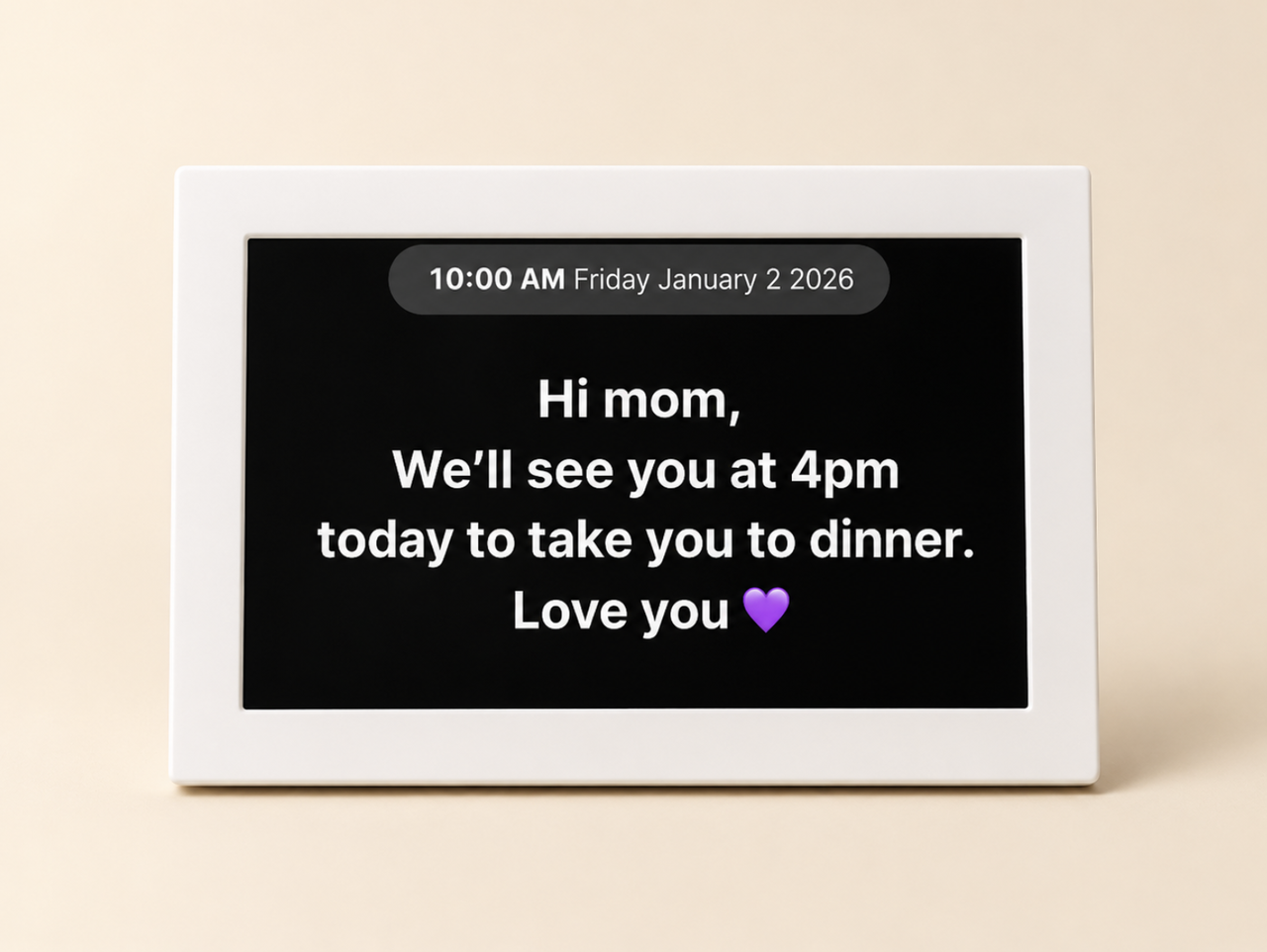
A digital Memoryboard is a connected display that helps a person see daily reminders, messages, photos, routines, and important updates in one simple place. Families and caregivers can send content to the board remotely, so the person using it does not need to manage a phone, app, tablet, or complicated device.
Many families are looking for easier ways to support someone with memory loss, aging changes, ADHD, dementia, Parkinson's, or daily routine needs. Phones and tablets can become confusing — they require unlocking, tapping, scrolling, and remembering how apps work. A digital Memoryboard offers something different: a simple, visible, shared place for reminders, routines, and connection.

What Is a Digital Memoryboard?
A digital Memoryboard is a screen that displays helpful information — like reminders, schedules, photos, messages, and daily notes — for someone who benefits from visual support.
It is usually managed by family members or caregivers through a phone or web app. The person using the board does not need to type, scroll, open an app, or remember how to use a device. It acts like a modern version of a whiteboard, sticky note, family calendar, and photo frame — all in one place.
The board is passive. The person can simply look at it.
QUICK ANSWER
A digital Memoryboard is a simple display that shows reminders, routines, photos, and messages for someone who benefits from visual support. It helps caregivers send updates from anywhere while giving the person at home a clear place to look for information.
How Does a Digital Memoryboard Work?
The idea is simple. A caregiver or family member adds content, and it appears on the board. Here is the basic flow:
1
Add Content
A caregiver or family member adds a message, reminder, photo, or schedule.
2
It Appears on the Board
The update appears on the digital Memoryboard.
3
No Action Needed
The person using the board sees the reminder without needing to open an app.
4
Update Anytime
The family can update it remotely as plans change.
For example, you might send:
Doctor appointment at 2:00 PM.
Take medication after breakfast.
Your daughter will call tonight.
Lunch is in the fridge.
Today is Friday.
Happy birthday from the grandkids.
Here is a photo from our beach trip.
Good morning, Mom. We love you.
Why Families Use Digital Memoryboards
Every family's situation is different. But there are a few reasons that come up again and again.
•
Fewer repeated phone calls.
Families want to reduce the back-and-forth of calling to remind someone about the same thing.
•
Less repetition for caregivers.
Caregivers often find themselves repeating the same reminders all day. A board gives those reminders a home.
•
More calm for the person at home.
Loved ones may feel less anxious when they can see what is happening next.
•
Distance isn't a barrier.
Adult children who live far away can still stay present with daily messages and reminders.
•
One place for the whole care team.
Spouses, adult children, and care professionals can all share updates in one organized spot.
A digital Memoryboard helps turn reminders into something visible, calm, and easy to check.
Who Is a Digital Memoryboard For?
A digital Memoryboard is not just for one kind of person. It can support a wide range of situations.
Older Adults Who Need Daily Reminders
For seniors who forget appointments, meals, family visits, or the day's plan, a digital Memoryboard gives them a reliable place to check. It can support independence at home by reducing the need to call someone for every question.
People Living With Memory Loss or Dementia
When someone asks the same question many times — 'What time is my appointment?' or 'Who is coming today?' — the board can offer a calm, visible answer. It may support daily routine and reduce confusion, and it is designed to be used alongside a person's existing care plan. We do not make medical claims — but many families have found it helpful.
Family Caregivers
Caregivers carry a lot. A digital Memoryboard helps reduce the mental load of being the 'human reminder.' You can send updates once, and the person at home can check the board whenever they need to.
Adult Children Who Live Far Away
You do not have to be in the same house to stay present. A board lets you send photos, notes, and reminders from wherever you are. Your loved one sees your message without needing to pick up their phone.
Spouses and In-Home Caregivers
The board can support daily routines — meals, medications, appointments, and reassurance — throughout the day. Spouses often find it helps both of them feel more organized and less stressed.
Care Professionals and Assisted Living Teams
Speech-language pathologists, care managers, assisted living staff, and home care teams may use visual reminders to support routine, orientation, and daily communication. A digital Memoryboard can complement existing care approaches.
What Can You Put on a Digital Memoryboard?
The board is flexible. You can put almost anything on it that helps someone get through the day. Here are some common types of content:
Daily schedule
Appointment reminders
Medication prompts
Meal reminders
Photos from family
Encouraging notes
Birthdays and anniversaries
Weather reminders
Care instructions
Routine steps
Visitor updates
Simple orientation cues (day, date, time)
In practice, it might look like this:
Good morning, Dad. Today is Tuesday. Breakfast is on the counter.
Your physical therapy appointment is at 11:30 AM.
Sarah is picking you up at 2:00 PM.
We love you. Here is a photo from Sunday dinner.
How Does It Compare to Other Options?
Digital Memoryboard vs. Regular Whiteboard
Regular Whiteboard
Must be updated in person
Can get messy or smudged
Content can be erased accidentally
Cannot show photos
Hard for remote family to update
Digital Memoryboard
Can be updated remotely
Stays clear and organized
Can display photos and messages
Supports multiple family members
Reminders can be scheduled ahead of time
Digital Memoryboard vs. Tablet or Phone
Phones and tablets require the person to interact with the device. They may need to unlock it, open an app, tap, scroll, or respond. This can be difficult for someone who struggles with technology, memory, vision, focus, or fine motor tasks.
A digital Memoryboard is passive. The person can simply look at it. No tapping. No unlocking. No pressure to respond. This is one of the most important differences.
When Is a Digital Memoryboard Helpful?
You might find a digital Memoryboard especially useful in situations like these:
When someone asks the same question many times
When a caregiver is managing many appointments and reminders
When family members live far away
When someone feels anxious about what is happening next
When routines are changing or disrupted
When a loved one needs simple visual reassurance
When a household runs on scattered paper notes
When a person no longer likes using a phone or tablet
What Makes a Good Digital Memoryboard?
Not all digital boards are the same. If you are looking for one, here are things worth considering:
Large, easy-to-read display
Simple setup
Remote posting by family or caregivers
Ability to schedule reminders
Photo sharing support
Clear, legible text
Family or care-circle sharing
Reliable internet connection
No complicated steps for the person using the board
Designed for older adults and caregivers
Is a Digital Memoryboard Only for Dementia?
No. A digital Memoryboard can help many people — not just those with dementia. It can be useful for:
Older adults with mild memory changes
People with ADHD who benefit from visual structure
People recovering from illness or surgery
People with Parkinson's who need daily routine support
Families who want a shared reminder system
Anyone who benefits from having information visible throughout the day
It is not a replacement for medical care, emergency support, or hands-on caregiving. It is a support tool for communication, routine, and reminders — designed to reduce friction and create calm in the daily routine.
Make the Day Easier to Follow
Memoryboard helps families create a calm, visible routine at home — with reminders, appointments, photos, and messages in one familiar place.
Designed for older adults and people living with memory loss. Simple for caregivers to set up and update.
Choose the Right Size for Your Space
Pick the 10.1″ for nightstands and kitchen counters.
Pick the 15.6″ for living rooms and reading across the room.
Explore Memoryboard


