
Caregiver Guide
Supporting Independence at Home for Someone With Early-Stage Dementia
Many families feel caught between protecting their loved one and respecting their independence. This guide offers practical, compassionate support for families navigating early-stage dementia living alone.
🕐 8 min read
Early-Stage Dementia
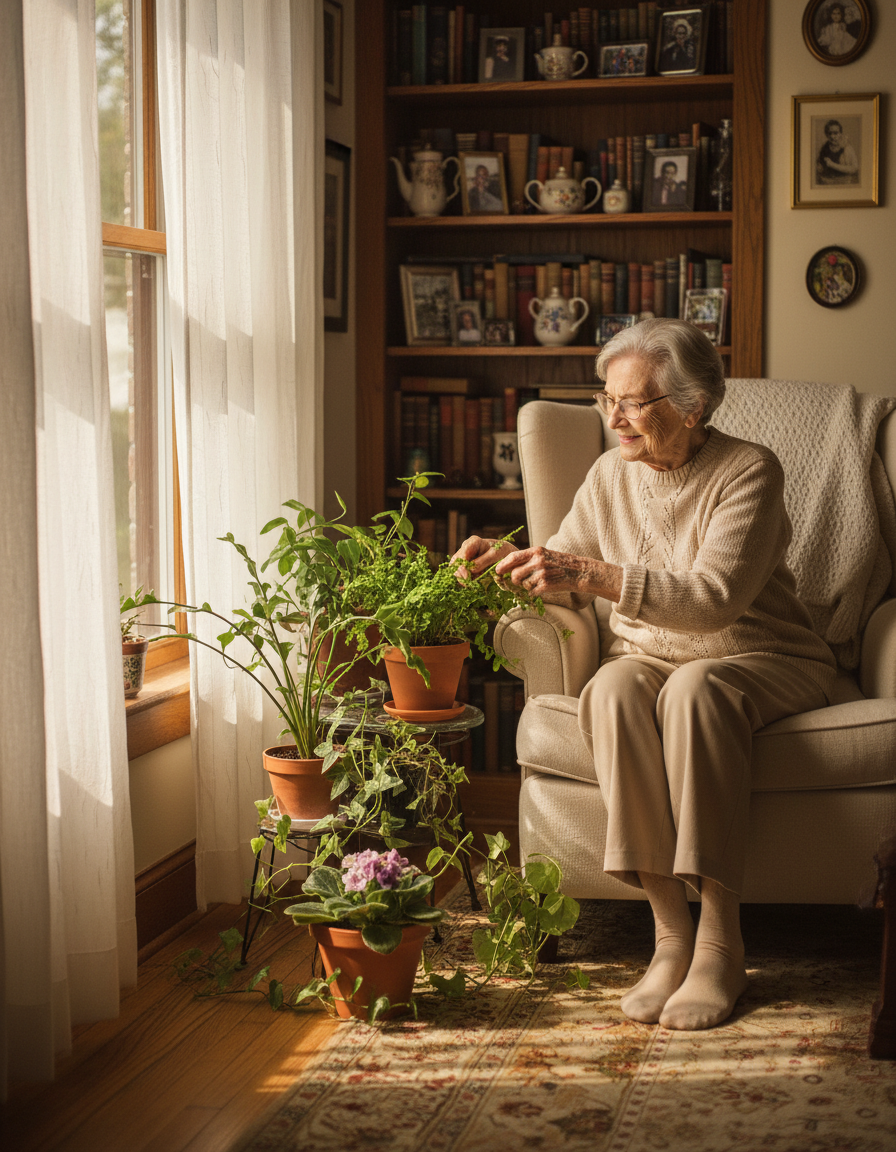
When a parent or spouse is diagnosed with early-stage dementia, the worry can set in before the symptoms are even noticeable to others. They may still be making their own meals, keeping up with routines, and enjoying time at home. But in the back of your mind, a question keeps returning: Is it safe for them to be alone?
This tension — between protecting someone you love and respecting their independence — is one of the most common experiences among family caregivers. Early-stage dementia living alone does not automatically mean someone is at risk. Many people continue to manage daily life with the right structure, support, and a few simple tools around them.
This guide is for families looking for practical, respectful ways to help a loved one stay oriented, feel supported, and remain as independent as possible — without taking over too soon.
Can Someone With Early-Stage Dementia Live Alone?
There is no single answer. Whether someone with early-stage dementia can continue living alone — or spending significant time alone — depends on many factors, including how their memory is changing, their overall health, the safety of their home environment, and the level of support available to them.
It is always worth speaking with your loved one's doctor or care team about their specific situation. But beyond medical guidance, families often find it helpful to ask some practical questions day to day.
A Few Practical Questions to Consider
Can they follow a basic daily routine?
Can they prepare simple meals safely?
Can they take medication with support?
Can they recognize emergencies and ask for help?
Can they use the phone or another way to communicate?
Do they become anxious, confused, or lost during normal daily tasks?
Is someone checking in with them regularly?
If you find yourself unsure about several of these, that is a signal to reassess — not necessarily to remove independence entirely, but to build the right support around it. The goal is to protect what matters most: your loved one's ability to feel capable, comfortable, and at home.
Why Independence Matters in Early-Stage Dementia
Independence is not just about safety or practicality. For someone experiencing early memory changes, being able to continue familiar routines, make small decisions, and feel at home in their own space is deeply tied to their sense of self. When people feel in control of their daily life, they tend to feel calmer, more confident, and more engaged.
The challenge for families is that the instinct to help can sometimes move faster than the need for it. Taking over tasks too soon — cooking, managing schedules, making decisions — can reduce confidence and increase frustration. Dementia independence at home is not about ignoring risk. It is about protecting what someone can still do well, while gently adding support where it is needed.
Caregivers often find the most success when they focus on simplifying the environment rather than taking things away.
Familiar Routines Reduce Anxiety
Predictable daily patterns help the brain feel safe and reduce moments of confusion or distress.
Clear Reminders Support Confidence
Simple, visible reminders help someone stay on track without relying only on memory.
Visual Cues Signal What Comes Next
Knowing what is happening today, and what to expect next, reduces uncertainty throughout the day.
Support Should Feel Helpful, Not Intrusive
The right kind of family support builds trust and keeps the person feeling capable, not controlled.
For families supporting dementia independence at home, the goal is not perfection. It is a steady, loving presence that helps someone do more of what they can still do well.
The Caregiver Anxiety Behind a Parent Living Alone
If you are reading this, you probably already know this feeling. The phone rings and you feel a small wave of relief. They answered. Then comes the other thought — What if they hadn't? Caregiver anxiety when a parent with dementia lives alone is completely normal. You may find yourself thinking about missed appointments, forgotten meals, a medication that did not get taken, a confusing situation they couldn't navigate alone. You might check in by phone more than you planned. You might worry about what is happening in the hours you cannot see.
Many caregivers describe feeling like they have to choose between two uncomfortable options: calling constantly and feeling like they are hovering, or stepping back and worrying that something has gone wrong. Neither feels right.
But there is often a middle ground — and it starts with understanding the difference between what your loved one actually needs and what feels like the only way to check.
“
Your loved one may not need more surveillance.
They may need more visibility.
The right kind of support helps them see the day clearly — without watching their every move.
Visibility means your loved one can look at something in their home and know what is happening today. It means a message from you is already waiting for them in the morning. It means they do not have to try to remember what you said on the phone last night. That kind of support respects independence while still keeping them connected.
Visibility Without Surveillance
There is an important difference between watching someone and supporting someone.
Surveillance watches the person. It tracks, records, and reports. While some families find safety technology helpful, many people with early-stage dementia find it uncomfortable or even distressing to feel monitored in their own home.
Visibility is different. Visibility means the person can always look at something clear and simple in their environment and know what is happening, what comes next, and that their family is thinking of them. It supports confidence rather than creating self-consciousness.
What a visible daily display can do:
Shows today's date and day of the week
Shows what is happening today and what to expect next
Displays simple reminders — without needing to remember them
Shares short family messages throughout the day
Shows photos that create comfort, recognition, and connection
Reduces the need for repeated phone calls
Gives the person something clear to look at when they feel unsure or anxious
How Memoryboard Helps
Memoryboard gives families a way to support independence from a distance — without making their loved one feel monitored. It sits in the home as a simple, easy-to-see display. Family members can update messages, reminders, and photos remotely. The loved one does not need to manage an app, remember a password, or answer the phone. It is always there, visible and calm.
This is the middle ground many families are looking for. Not cameras. Not constant calls. Just a quiet, reliable presence in the room that helps the day make sense.
Common Challenges When Someone With Early-Stage Dementia Lives Alone
Every day at home looks a little different. These are some of the challenges families describe most often — and some gentle ways to think about them.
It is common for someone with early memory loss to wake up uncertain about what is happening that day. They may ask 'What am I doing today?' multiple times, forget a visit from a family member, miss a meal, or lose track of an activity they were looking forward to. A visible daily schedule — something they can see without having to remember to check — can make a significant difference. When the day is laid out clearly in front of them, there is less relying on memory alone.
Repeated questions often come from anxiety, not forgetfulness alone. When someone feels uncertain, they reach for reassurance — and asking a question is a natural way to do that. The challenge is that phone calls and conversations are temporary. Once the call ends, the answer disappears. A visual reminder that stays in place can reduce the need to ask again. It gives the person a way to find the answer themselves, which also supports confidence and calm. You may find it helpful to read more about why people with dementia ask the same questions repeatedly and what actually helps.
Phone calls can be unreliable. Your loved one may not answer, may forget what was said a few minutes later, or may become confused by the timing or content of the call. This can leave families feeling helpless — they tried to connect, but it did not stick. A display message works differently. It stays visible after the call ends. It does not require the person to remember to pick up the phone, recall the conversation, or hold new information in working memory. The message is simply there.
Medication safety is an area where family guidance and professional oversight are important. Pill organizers, pharmacy packaging, and caregiver check-ins are all valuable tools, and any concerns about missed doses should involve your loved one's care team. For lighter daily support — a nudge to drink water, a reminder that lunch is in the refrigerator, a note that dinner is coming — a visible reminder can help cue the person without requiring a phone call or a caregiver to be present.
Independence should never mean isolation. One of the quiet challenges of early-stage dementia living alone is that the person may feel cut off from family life even when they are physically safe. A photo from a family gathering, a short message from a grandchild, a note that says 'We are thinking of you today' — these small gestures carry real emotional weight. Staying connected does not require physical presence. It requires intention. Learn more about how family connection supports dementia daily routine and emotional well-being.
How to Support Dementia Independence at Home
Practical support does not have to be complicated. These steps can help you create a more manageable, reassuring daily environment for someone with early memory loss.
1
Build a Consistent Daily Routine
Predictability is one of the most powerful tools available. A consistent structure — wake-up time, meals, activities, rest, family check-ins, bedtime — helps reduce the number of moments where the person has to figure out what happens next. Read our guide to building a daily schedule for someone with dementia for practical templates and ideas.
2
Use Visual Reminders
Visual cues work better than relying on memory or phone calls alone. When a reminder is visible in the room — written clearly, placed where the person will see it — it does not depend on recollection. It is simply there. This is one of the most effective ways to support a dementia daily routine without constant caregiver involvement.
3
Keep Messages Short and Specific
Avoid long explanations or complex information. Short, clear messages are easier to read and process. For example:
Lunch is in the refrigerator.
Maria is visiting today at 2:00 PM.
Today is Wednesday.
Your appointment is tomorrow, not today.
We love you. You are safe at home.
4
Reduce Clutter
A calm, organised environment supports clearer thinking. Keep important items — keys, medication, phone — in the same places consistently. Use simple labels when helpful. Reduce visual noise in the spaces your loved one uses most.
5
Create Simple Safety Checks
Work with your loved one's care team and conduct a home safety review. Common areas to consider include: stove safety, emergency contacts in a visible place, clear lighting, fall prevention, and medication management. These steps support aging in place safely.
6
Stay Connected Without Overwhelming Them
A daily message can feel warm and supportive. Too many calls, however, can feel stressful or create pressure to perform — to sound okay when they may not be sure they are. Find a rhythm that feels connecting, not demanding. Learn more about managing caregiver stress and finding sustainable ways to communicate.
7
Reassess Regularly
Independence needs and capacities can change over time. Review the situation regularly with your family and your loved one's healthcare team. What works well today may need gentle adjustments in a few months. That is a normal and healthy part of supporting someone with early-stage dementia.
Where Memoryboard Fits Into a Home Support Plan
Memoryboard is not a replacement for caregiving, medical support, or emergency services. It is a practical communication and reminder tool — something that helps bridge the gap between the independence your loved one wants and the reassurance your family needs.
Think of it as a supportive daily anchor in the home. It is always visible, always current, and always from someone who cares.
What Memoryboard can help with:
Helps your loved one see the day clearly
Lets family update reminders remotely
Reduces stress around missed calls and forgotten information
Supports routine, orientation, and a sense of calm
Keeps family messages and photos visible all day
Helps caregivers feel more connected without hovering
Works well for early-stage memory loss, assisted living, and family caregiving
Supports aging in place with dignity and simplicity
Families tell us that the most meaningful part of Memoryboard is not just the reminders — it is knowing that their loved one can look at the board and feel remembered. That quiet, constant connection matters. Learn more about how Memoryboard supports assisted living and home-based caregiving.
Examples of Memoryboard Messages for Early-Stage Dementia
Not sure what to write? Here are simple, real message ideas that families use every day.
Daily Orientation
Today is Monday, June 10.
You are home today. Nothing is planned until this afternoon.
Sarah will call after dinner.
Appointments
Your doctor appointment is tomorrow at 10:00 AM.
John will pick you up at 9:30 AM.
No appointments today. Enjoy your morning.
Meals
Lunch is in the refrigerator.
Dinner will be delivered at 5:30 PM.
Drink a glass of water with lunch.
Family Connection
We love you.
The kids say hello and are thinking of you.
Here is a photo from Sunday lunch — it was a lovely day.
Reassurance
You are safe at home.
Everything is okay.
Your family will check in this evening.
Helpful Reminders
Take your afternoon tablet with a glass of water.
The front door is locked.
Your keys are on the hook by the door.
Make the Day Easier to Follow
Memoryboard helps families create a calm, visible routine at home — with reminders, appointments, photos, and messages in one familiar place.
Designed for older adults and people living with memory loss. Simple for caregivers to set up and update.
Choose the Right Size for Your Space
Pick the 10.1″ for nightstands and kitchen counters.
Pick the 15.6″ for living rooms and reading across the room.
Explore Memoryboard


