
8 min read
DEMENTIA CARE GUIDE
Supporting Independence at Home for Someone With Early-Stage Dementia
When someone you love is living with early memory loss, you want to help them stay safe without taking away their independence. The right routines, reminders, and support can make home feel more manageable.
Support independence without constant check-ins
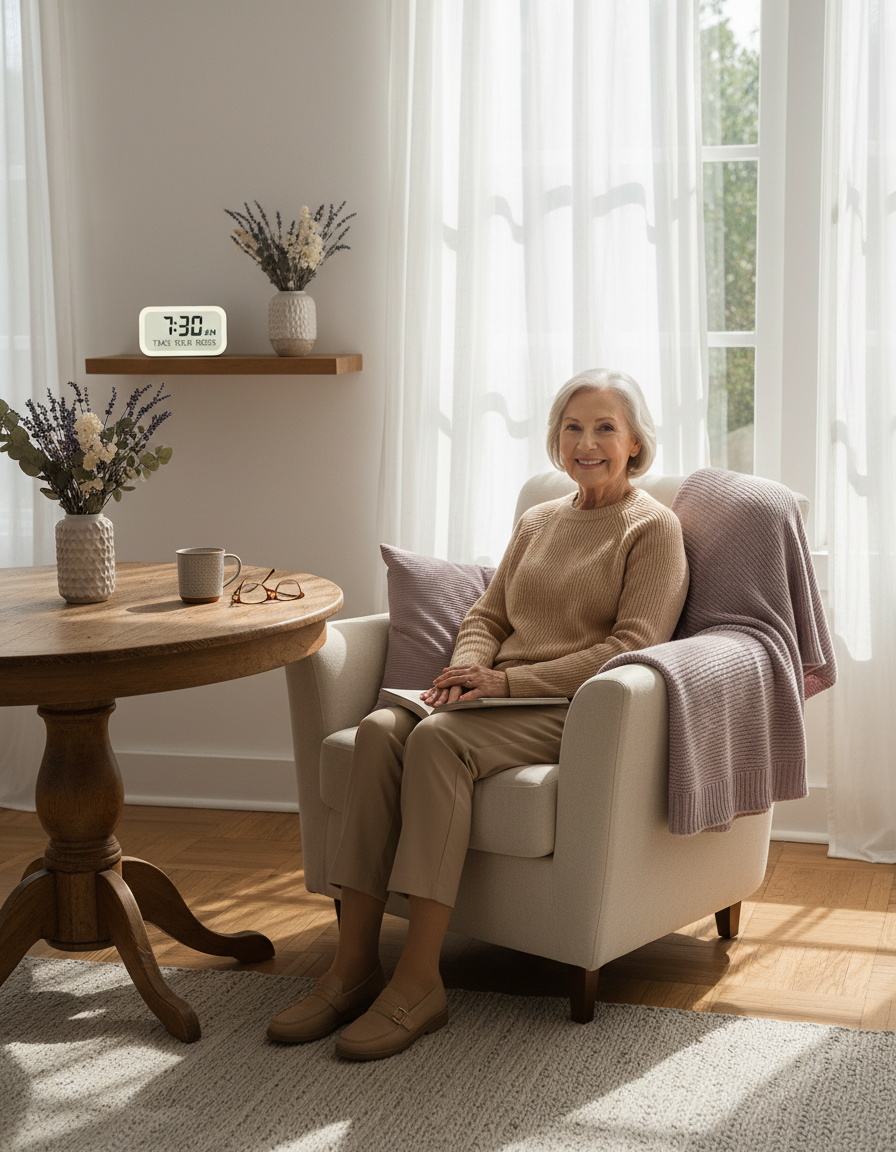

If you have been wondering whether your parent can still live at home safely, you are not alone. Many families face this question when early-stage dementia begins to change daily life. The worry can feel constant — and it is completely understandable.
Early-stage dementia does not always mean someone needs to leave home right away. Many people continue living at home for months or years with the right support. What matters is having structure, familiar routines, and gentle reminders that reduce confusion without taking away their sense of self.
For many families, the challenge is not whether they care. It is knowing how to help without making their loved one feel watched, corrected, or controlled.
This guide is for family caregivers — especially adult children — who want to support a parent living alone with early memory loss. We will walk through practical routines, home adjustments, visual reminders, and simple tools that can make daily life feel more manageable for everyone.
We will also introduce Memoryboard — a simple display tool that helps families share reminders, schedules, and messages with a loved one at home, without needing them to use a phone or app.
SECTION 1
What Independence Can Look Like in Early-Stage Dementia
Independence looks different for everyone. For someone in the early stages of dementia, it does not mean doing everything without help. It means having the ability to move through their day in a way that feels familiar and dignified.
Independence may include:
Living at home in a familiar environment
Following morning and evening routines
Preparing simple meals
Remembering or seeing upcoming appointments
Knowing who is visiting
Feeling connected to family
Having reminders visible throughout the day
Independence at home works best when the person has simple systems around them that reduce confusion and make the day easier to follow.
You do not need to do everything for someone to support their independence. Often, the most helpful thing you can do is set up small systems that allow them to feel in control of their own day.
SECTION 2
Why Family Caregivers Feel Anxious When a Parent Lives Alone
If you find yourself checking your phone more than usual, or calling your parent multiple times a day just to make sure they are okay, you are not alone. Caregiver anxiety is one of the most common experiences for adult children of someone with early-stage dementia.
The worries tend to follow a familiar pattern:
Did they eat today?
Did they take their medication?
Do they remember the appointment?
Will they answer the phone?
Are they confused about the day?
Are they feeling lonely?
Are they safe at home?
Frequent phone calls can sometimes help, but they can also create frustration. Some parents may stop answering, forget the conversation by the time it ends, or feel like they are being checked on too much.
Caregivers often want reassurance, but their loved one may want dignity and space. The goal is to create support that protects both.
This tension is real, and it is okay to name it. The good news is that there are ways to provide reassurance that do not feel intrusive — and we will walk through them in the sections ahead.
SECTION 3
Build a Simple Daily Routine
Routine is one of the most powerful tools available to someone with early-stage dementia. When each day follows a familiar rhythm, there is less need to remember what comes next. The day becomes easier to navigate, and anxiety is reduced for both the person at home and the caregiver.
A good routine does not need to be complicated. Here is a simple example:
Morning Routine
Wake up
Eat breakfast
Take medication
Check the day's schedule
Get dressed
Afternoon Routine
Lunch
Rest or quiet time
Light activity
Review a family message or reminder
Evening Routine
Dinner
Prepare for tomorrow
Lock doors
Bedtime reminder
Caregiver Tip: Keep reminders in one clear place. Too many sticky notes, notebooks, phone alerts, and verbal reminders can become confusing. One visible, easy-to-read source of information works better than many.
You can adjust the routine to fit your loved one's lifestyle and preferences. The goal is predictability, not perfection.
SECTION 4
Use Visual Reminders Instead of Repeated Phone Calls
People with early-stage memory loss may benefit from seeing the same information more than once. Visual reminders — things they can look at on their own, at their own pace — can reduce anxiety and help structure the day without requiring someone to call and remind them every few hours.
Appointments and important dates
Meal times and what is available
Medication prompts
Upcoming visitors
Daily routines and tasks
Reassuring messages from family
Simple step-by-step instructions
How Memoryboard Helps
Memoryboard gives families a way to place clear reminders, photos, and messages where their loved one can see them throughout the day. Instead of relying on phone calls or sticky notes, caregivers can update the board remotely and the most important information stays visible.
This supports independence because your loved one can look at the board on their own. They do not need to find their phone, remember a password, or ask someone for help. The information is simply there.
Small reminders can make the day feel less stressful for everyone.
SECTION 5
Visibility Without Surveillance
Many caregiving tools focus on tracking, location alerts, cameras, or monitoring. These can be helpful in some situations, but they are not always the right fit — especially in early-stage dementia when the person still values their privacy and independence.
Memoryboard offers a different kind of support.
Visibility without surveillance means you can support your loved one's day without making them feel watched. It gives the caregiver peace of mind while helping the person at home feel respected.
Instead of showing where someone is or what they are doing, Memoryboard shows them what they need to know. It is a display of helpful information, not a monitoring device.
Examples of what families can share:
Good morning, Mom. Today is Tuesday.
Your lunch is in the fridge.
Maria is visiting at 2:00 PM.
Please take your afternoon medication.
Dad, your doctor appointment is tomorrow at 10:00 AM.
We love you. Call us if you need anything.
These messages are simple, gentle, and helpful. They reduce the number of questions someone needs to hold in their memory — and they give the caregiver reassurance that the right information is visible.
SECTION 6
Make the Home Easier to Navigate
Small changes around the home can make a big difference for someone with early-stage memory loss. The goal is to reduce confusion and make everyday tasks easier — without making the home feel clinical or unfamiliar.
Keep walkways clear of clutter or trip hazards
Label important drawers or cabinets with simple words
Use a large, easy-to-read clock and calendar
Keep frequently used items in the same place each day
Reduce clutter on kitchen counters
Use simple, consistent lighting throughout the home
Keep emergency numbers visible near the phone or entryway
Place reminders near spaces where they are most useful
Memoryboard works well in the kitchen, living room, bedroom, or near the front door — wherever your loved one naturally spends time or passes through during the day.
You do not need to redesign the entire home. Even one or two changes can reduce daily confusion and help your loved one feel more at ease.
Make the Day Easier to Follow
Memoryboard helps families create a calm, visible routine at home — with reminders, appointments, photos, and messages in one familiar place.
Designed for older adults and people living with memory loss. Simple for caregivers to set up and update.
Choose the Right Size for Your Space
Pick the 10.1″ for nightstands and kitchen counters.
Pick the 15.6″ for living rooms and reading across the room.
Explore Memoryboard


