
Support
Memory Boards for Dementia: A Buyer’s Guide (2026)
If you’ve started searching for “memory boards,” you’ve probably already felt the problem: too many options, not enough clarity on what actually helps someone with dementia day-to-day. This guide breaks it down simply—what a memory board is, the different types, who each works best for, and how to choose one that actually improves daily life (not just adds clutter).
Read more

Written by
Tyler Zanini, Founder at Memoryboard
What Is a Memory Board?
A memory board is a visual tool that helps someone with dementia stay oriented, reduce anxiety, and maintain a sense of connection.
At its core, it answers the questions that come up over and over:
Where am I?
What day is it?
What’s happening today?
Who are these people?
Memory boards do this using a combination of:
Photos (family, caregivers)
Written reminders (appointments, routines)
Time and date displays
Simple, repeatable visual cues
The best memory boards don’t just provide information—they provide reassurance and familiarity.
The 4 Types of Memory Boards
Not all memory boards are the same. Each type solves a slightly different problem.
1. Whiteboard Memory Boards
What they are: Dry-erase boards with written reminders (schedule, notes, names).
Best for:
Early-stage dementia
Users who can still read and interpret written information
Households where caregivers update information daily
Pros:
Low cost
Flexible and customizable
Easy to update
Limitations:
Requires frequent manual updates
Can become cluttered or confusing
Not ideal for moderate to late stages
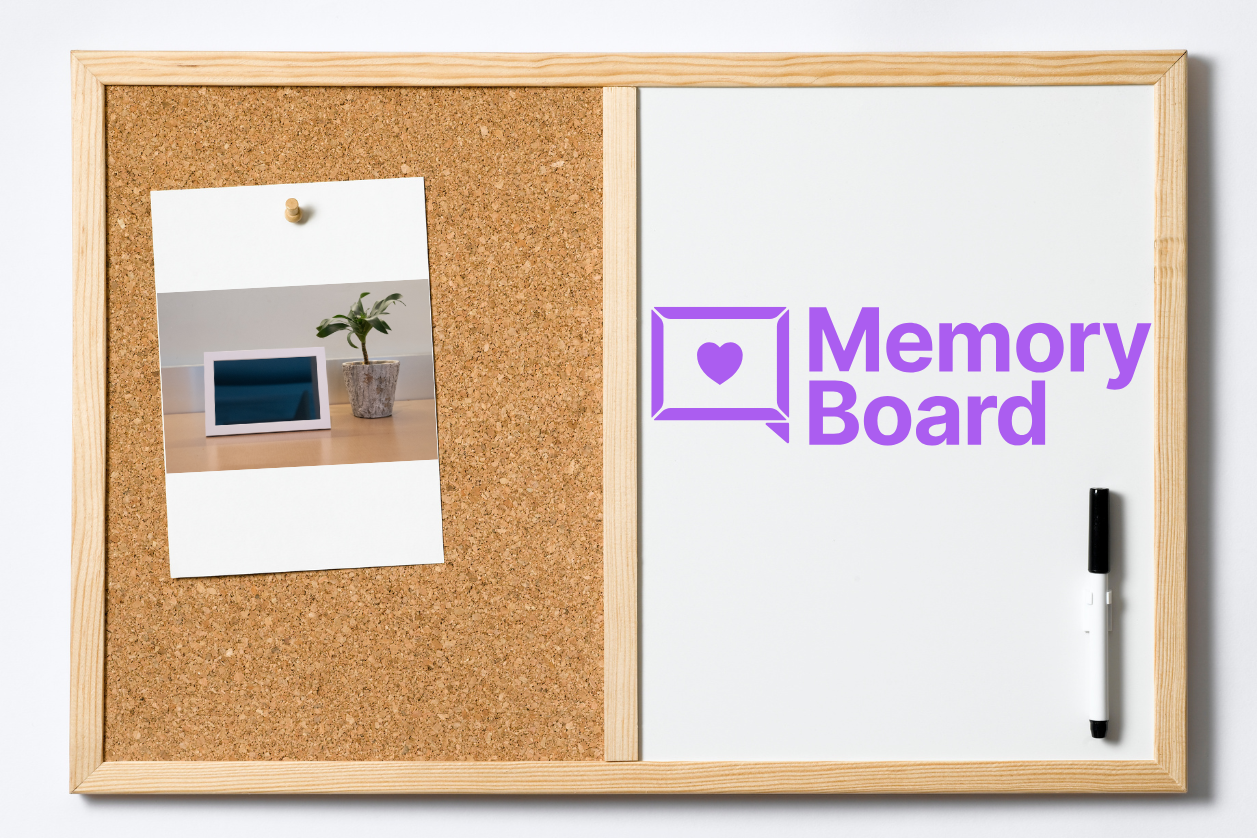
2. Corkboard / Photo Boards
What they are: Boards with pinned photos, notes, and printed reminders.
Best for:
Emotional connection (recognizing family faces)
Creating a sense of familiarity in a room
People who respond well to visual memory cues
Pros:
Highly personal
Great for reinforcing identity and relationships
No tech required
Limitations:
Static (doesn’t update automatically)
Can become overwhelming if overfilled
No time/date functionality
3. Digital Memory Boards (Displays)
What they are: Digital screens that show rotating photos, reminders, and messages—often controlled remotely by family.
Best for:
Long-distance caregivers
Moderate-stage dementia
Families who want dynamic, updated content
Pros:
Photos update automatically
Can display daily routines and reminders
Remote access (family can add content from anywhere)
Limitations:
Higher upfront cost
Requires setup and Wi-Fi
Simplicity varies by product
4. Smart Dementia Clocks
What they are: Specialized digital clocks designed for dementia, showing large, clear time, date, and sometimes reminders.
Best for:
Orientation (day, time, part of day)
Reducing “What time is it?” anxiety
Moderate to later stages
Pros:
Extremely simple interface
High readability
Reliable daily structure
Limitations:
Limited personalization
Focused mainly on time (less emotional connection)
Which Type Is Right? (Real-World Scenarios)
Here’s how families typically choose:
Early stage + independent living:
→
Whiteboard or simple digital display
Needs emotional reassurance (missing family, confusion):
→ Photo/corkboard or digital display with family images
Long-distance caregiving:
→ Digital memory board (remote updates matter most)
Frequent time confusion / anxiety:
→ Smart dementia clock (paired with another board)
Mid-to-late stage dementia:
→ Digital display or clock (less reliance on reading/writing)
What to Look for When Buying a Memory Board
1. Simplicity Over Features
More features ≠ better.
Look for:
Large text
Clear layout
Minimal distractions
Avoid anything that requires the user to “learn” the system.
2. Visibility
Ask:
Can it be read from across the room?
Is the contrast high enough?
Tip: 10.1" works for bedside use, but 15.6" is significantly better for living rooms or shared spaces.
3. Remote Access (For Digital Boards)
If you’re not physically present every day, this matters a lot.
Look for:
App-based updates
Multiple family contributors
Instant syncing
4. Routine Support
The best memory boards reinforce daily structure, not just static info.
Examples:
Morning / afternoon / evening labels
Scheduled reminders
Repeating routines
5. Emotional Connection
Don’t underestimate this.
Photos of:
Family members
Familiar places
Meaningful moments
…can reduce agitation and improve mood more than text alone.
Common Mistakes Families Make
1. Overloading the Board
Too much information becomes noise.
Fix: Keep it simple. Prioritize what’s used daily.
2. Choosing Based on Price Alone
Cheaper options often require more manual effort—which leads to inconsistency.
Consistency matters more than cost.
3. Ignoring Disease Progression
What works today may not work in 6–12 months.
Fix: Choose something that adapts (digital options are stronger here).
4. Not Placing It Strategically
A perfect board in the wrong location is useless.
Best locations:
Near the bed
In the main living area
By the kitchen
Digital vs. Traditional: What’s Actually Better?
This isn’t a one-size-fits-all answer—but there is a clear trend.
Traditional Boards Win When:
You want something simple and low-cost
The user is early-stage and engaged
A caregiver is physically present daily
Digital Boards Win When:
You’re managing care remotely
You want consistency without manual updates
The condition is progressing
You want both function + emotional connection
Our Take: The Case for Digital Memory Boards
Most families eventually run into the same issue:
Manual systems break down over time.
Whiteboards don’t get updated. Corkboards become static. Information becomes outdated.
Digital memory boards solve this by:
Keeping content fresh automatically
Allowing multiple family members to contribute
Combining photos + reminders + structure in one place
They’re not just more convenient—they’re more sustainable as dementia progresses.
FAQ
What is the best memory board for dementia patients?
It depends on stage and caregiving setup. Digital boards are often preferred for long-term use, especially when caregivers aren’t always present.
Are memory boards actually effective?
Yes—when kept simple and consistently updated. They reduce confusion, support routine, and improve emotional comfort.
Should I choose a 10.1" or 15.6" display?
10.1" → bedside or small rooms
15.6" → living areas, better visibility, easier reading
Can memory boards replace caregivers?
No. They support care—but don’t replace human interaction.
How often should a memory board be updated?
Traditional boards: daily or as needed
Digital boards: ideally updated continuously (photos, reminders, routines)
Final Thought
The right memory board doesn’t just display information—it reduces stress, builds familiarity, and helps someone feel grounded in their day.
If you’re choosing one, optimize for:
Clarity
Consistency
Connection
Everything else is secondary.
Join our mailing list and get our FREE daily routine template & tips guide 💜
Email address
Sign up
More from the blog
Read more helpful tips about connecting with your loved ones from the team at Memoryboard.


Empower people with memory loss
Memoryboard enhances daily life and strengthens connections


