
Caregiver Support · Living Well with Memory Loss
Living Well With Early Memory Loss: How to Help a Parent Stay Independent, Active, and Connected
An early diagnosis of early memory loss isn't the end of a meaningful life. With the right support, many people continue to live full, engaged lives for years — the goal is simply to help your parent stay as independent, active, and connected as possible.

Quick Answer
The best way to support a parent with early memory loss is to focus on three core areas: independence, activity, and connection.
Independence
Activity
Connection
Understanding Early Memory Loss — and What Comes Next
An early diagnosis of memory loss can feel overwhelming, and it's completely natural to want to step in and do everything for your parent. You love them, and that instinct to protect comes from a good place. Take a breath — you don't have to have it all figured out today.
Often, the most helpful approach is to support the abilities your parent still has, rather than focusing only on what's changing. Encouraging them to stay engaged in their own routines and choices helps them feel capable and confident. Small moments of independence can mean a great deal.
Living well is still very possible. Every person's experience is different, so the best support is the kind that fits your parent as an individual — their pace, their interests, and the things that bring them comfort.
Support Independence Without Taking Over
Helping a parent stay independent means guiding, not doing everything for them.
Do with, not for
Keep routines simple
Break tasks into smaller steps
Use reminders and visible cues
Involve your parent in decisions
Avoid over-restricting out of fear
Stay Active in Body and Mind
Movement and mental engagement both matter for someone living with memory loss.
Walking
Gardening
Light movement
Music
Hobbies and puzzles
Reading
Conversation
Activities that bring purpose and joy.
Stay Connected
Social connection supports mood, identity, and quality of life.
Regular family contact
Staying socially involved
Visits, phone calls, photos, and outings
Support groups, memory cafés, or community activities
How Memoryboard Helps
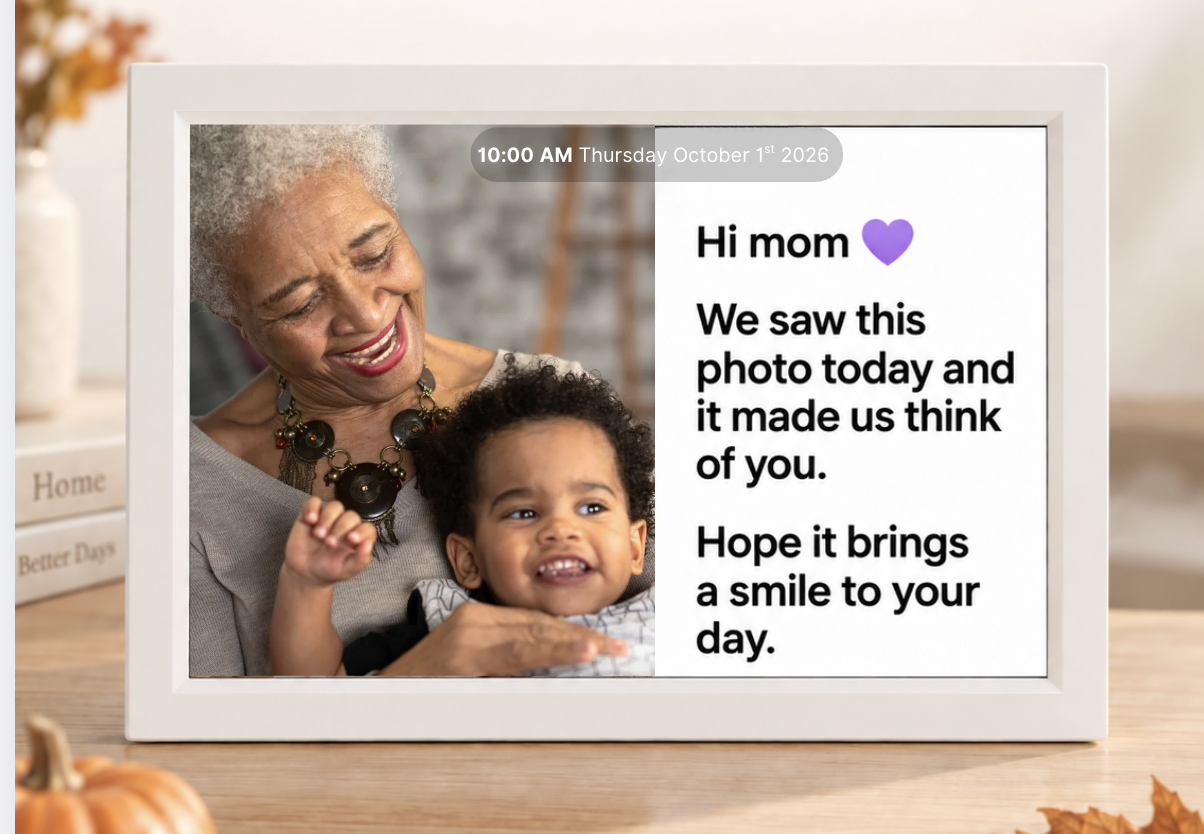
Memoryboard supports two of the most important goals for anyone living with memory loss — staying independent and staying connected. It's a simple in-home display that can show the day and date, reminders, appointments, messages, and family photos, giving gentle daily prompts that make routines easier to follow.
Family members can update everything remotely through a companion app, so the schedule always stays current. Unlike many dementia communication tools, your loved one never has to learn or manage any complicated technology — the display simply shows what matters, clearly and calmly.
Independence
Reminders for meals, appointments, and medications.
Activity
Prompts for walks, routines, or hobbies.
Connection
Family photos and messages, shared right on screen.
Orientation
Easy-to-see day and date display.
What Families Can Do This Week
A simple, practical checklist you can start using right away — small steps that make a real difference this week.
Notice what your parent still does well
Keep a steady daily routine
Plan one activity together this week
Encourage regular social contact
Look after your own physical and emotional health as a caregiver
Use simple reminders and visible cues to support memory
Common Questions About Early Memory Loss
Yes. Many people continue to enjoy meaningful, active lives for years after a diagnosis, especially with steady routines and supportive family involvement.
Support their remaining abilities rather than taking over. Keep routines simple, break tasks into smaller steps, and use visible reminders so they can do things on their own.
Yes. Regular movement and mental engagement — walking, hobbies, puzzles, conversation — can support mood, confidence, and overall well-being.
Staying socially connected supports mood, sense of identity, and quality of life. Regular visits, calls, and shared activities all make a difference.
Focus on small, thoughtful adjustments rather than heavy restrictions. Visible reminders and simple routines often reduce risk without taking away independence.
Gentle, enjoyable activities work best: walking, gardening, music, puzzles, reading, or simple hobbies that bring purpose and connection.
Clear, visible reminders for the day, date, appointments, and routines can ease daily stress for both the person and their family, supporting memory in a natural way.
You Don't Have to Navigate This Alone.
See how Memoryboard can help your family stay connected and make everyday routines a little easier.
Explore Memoryboard
This article is for educational purposes only and is not a substitute for professional medical advice. Every person's experience with memory loss is different.
Make the Day Easier to Follow
Memoryboard helps families create a calm, visible routine at home — with reminders, appointments, photos, and messages in one familiar place.
Designed for older adults and people living with memory loss. Simple for caregivers to set up and update.
Choose the Right Size for Your Space
Pick the 10.1″ for nightstands and kitchen counters.
Pick the 15.6″ for living rooms and reading across the room.
Explore Memoryboard


