Family Caregiving
5 Ways to Make the Holidays Easier When You're Caring for Kids and Parents
By the Memoryboard Team
•
7 min read
•
Holiday caregiving tips

It's the second week of December. You're wrapping gifts for the kids with one hand and checking your phone with the other, because Dad's pharmacy hasn't called back and Mom's doctor appointment is still on the calendar for Tuesday. Dinner needs to be planned. So does the school concert. And somewhere in the middle, you're hoping everyone has a nice holiday.
If that sounds familiar, you're one of the sandwich generation caregivers — adults raising children while also helping an aging parent. According to the National Alliance for Caregiving and AARP research, nearly 1 in 4 adults caring for a parent over age 65 are also raising a child under 18.
The holidays can make that balancing act feel even bigger. The good news: it doesn't have to be perfect to be meaningful. Here are five practical ways to make the season calmer for you, your kids, and the parent you love.
You Are Not Alone in the Sandwich Generation
The term 'sandwich generation' describes adults who are 'sandwiched' between caring for their children and caring for an aging parent. Many are also working, running a household, and now planning the holidays on top of it all.
If you're one of the many sandwich generation caregivers, your to-do list might include:
Children and their school, activities and gift lists
Aging parents and their health, safety, and appointments
Your career and work deadlines before year-end
Household responsibilities
Holiday planning, shopping, cooking and travel
That's a lot for one person. It's completely normal to feel stretched thin, tired, or even a little guilty no matter what you do. Holiday caregiver stress is real, and feeling it doesn't mean you're doing anything wrong. It means you care about a lot of people at once.
You don't need to do it all. You just need a plan that makes room for the people — including you — who matter most this season.
The five ideas below are small, realistic shifts that can help.
1. Aim for a Warm Holiday, Not a Perfect One
Perfect holidays are mostly a myth. What children remember, and what older adults feel, is the warmth in the room. Simplifying your plans can lower holiday caregiver stress for everyone, including a parent who may get overwhelmed by noise, crowds, or long days.
Ways to simplify
Host one family gathering instead of several
Buy some of the food instead of cooking everything
Choose fewer activities and let the rest go
Build in more breaks between events
Keep visits shorter for a loved one with dementia or memory loss, ideally at the time of day they feel best.
A quieter afternoon with a few familiar faces can be far easier for a parent with memory changes than a loud, all-day celebration. The Alzheimer's Association offers helpful dementia holiday tips on planning around your loved one's routines.
Meaningful connection matters more than a perfect holiday. A shared story, a favorite song, or a simple meal together is enough.
2. Let the Whole Family Share the Care
Caregiving for parents and children doesn't have to fall on one person. Many families find that people are happy to help — they just don't know what's needed. Specific requests work better than general ones.
Ways to share the load
Give teenagers simple holiday jobs, like setting the table or driving Grandpa to a family event
Ask siblings for specific help rather than waiting for them to offer
Let grandchildren spend simple, easy time with grandparents
Assign each family member a clear caregiving or holiday task.
Try asking like this
Can you take Mom to her appointment on Tuesday?
Can you bring dessert?
Can you spend an hour with Dad while I finish shopping?
Clear, small asks are easier to say yes to. They also help family caregiving feel like a team effort, not a one-person job. AARP's caregiving resources offer more ideas for dividing responsibilities.
3. Help Kids Connect With Grandma or Grandpa
Children often adapt more easily than adults expect, especially when they know what to expect first. A short, honest conversation before a visit can make everyone more comfortable.
Prepare kids with age-appropriate explanations
Use simple words. For example: 'Grandma's memory is changing, so she might ask the same question more than once or forget a name. It doesn't mean she loves you any less.' Older children may want to know more, and that's okay too. The Alzheimer's Association has guidance for talking with kids and teens.
Repeating questions or forgetting names never means a grandparent loves a child any less.
Simple things to do together
Looking through family photos
Listening to favorite music
Drawing together
Simple holiday crafts
Doing a puzzle
Singing holiday songs
Short, calm activities usually work best. Let the grandparent lead, and enjoy the moment rather than correcting details.
4. Protect Some Time for Yourself
Caregiver burnout during the holidays often builds quietly. You keep saying yes, skipping meals, and putting off sleep, until you're running on empty. Looking after yourself isn't selfish. It's part of how you keep showing up for everyone else.
Realistic ways to recharge
Take fifteen minutes alone, even if it's in the car or the kitchen
Accept help when someone offers
Say no to events that aren't essential
Ask another family member to take over one task
Keep up sleep, meals, and movement when you can
You don't need a spa day. Small pauses add up.
You don't have to figure it out alone
The Alzheimer's Association 24/7 Helpline offers free support and information for caregivers at any hour.
800-272-3900
For more ideas, see our caregiver resources and AARP's caregiver support guides.
5. Let Technology Carry Some of the Daily Load
Caregivers often spend a surprising amount of time on small, repeated tasks:
Repeating the same reminders
Calling a parent about appointments
Checking whether someone remembers an event
Sending photos one at a time
Coordinating information across the whole family
Technology for caregivers can help here, as long as it's simple. That's the idea behind Memoryboard.
What is Memoryboard?
Memoryboard is a simple digital display that sits in an aging loved one's home. Family members use the Memoryboard app to send, from anywhere:
Messages
Photos
Reminders
Appointments
Your parent doesn't need to open an app, remember a password, navigate menus, or operate complicated technology. Whatever the family sends simply appears on the display.
What it looks like in real life
A daughter sends a reminder that the doctor's appointment is tomorrow.
A grandchild sends a holiday photo.
Another family member sends a message that they'll visit Saturday.
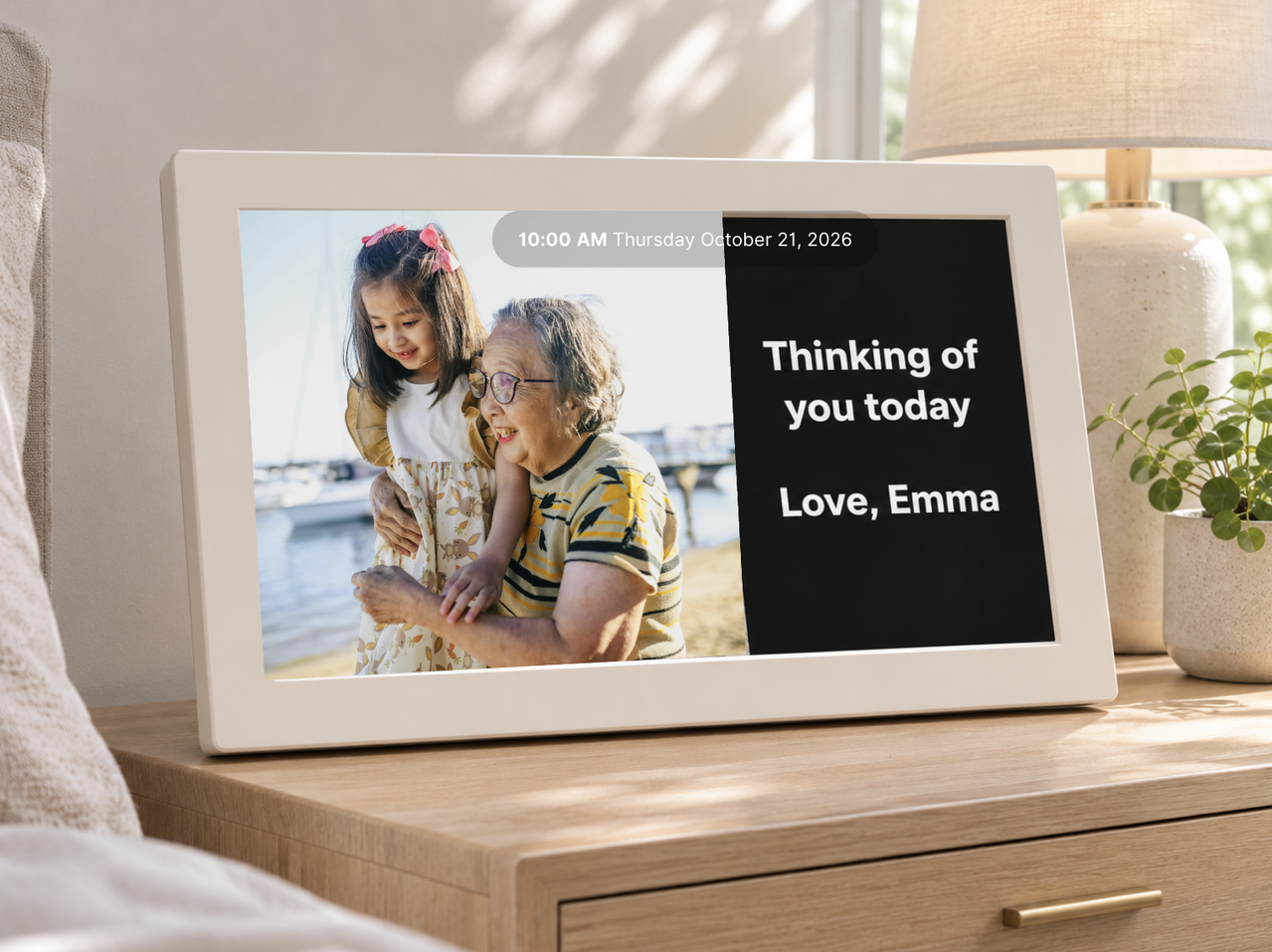
Because everyone can contribute, caregiving and connection are shared across the family instead of running through one primary caregiver. It's a practical way of staying connected with aging parents and giving digital reminders to seniors without another phone call. Learn how Memoryboard works.
Creating a Holiday That Works for Every Generation
The holidays don't have to be flawless to be full of love. For sandwich generation caregivers, the goal is a season that feels manageable and kind — for your kids, your parents, and you.
A quick recap:
Simplify your plans and expectations
Share responsibilities with family
Include children in age-appropriate ways
Protect some time for yourself
Use simple technology where it genuinely helps
Start with just one change this week. Maybe it's asking a sibling for one specific favor, or setting up an easier way to stay connected with aging parents. Small shifts help a lot, and you're doing better than you think.
Warm beats perfect, every time.
Frequently Asked Questions
The sandwich generation is made up of adults who are raising children while also helping care for an aging parent. Many are also working and managing a household.
Holidays add shopping, cooking, travel, and events to an already full schedule. For caregivers, that can mean more appointments, more coordination, and less time to rest.
Simplify your plans, ask family for specific help, take short breaks, and say no to non-essential events. The Alzheimer's Association 24/7 Helpline (800-272-3900) is also available.
Use simple, honest, age-appropriate words. You might say, 'Grandma's memory is changing, so she may repeat questions or forget names. It doesn't mean she loves you any less.'
Looking through family photos, listening to music, drawing, making simple crafts, doing puzzles, and singing holiday songs are all gentle options.
Simple tools can reduce repetitive tasks like reminder calls and one-at-a-time photo sharing, and make it easier for the whole family to stay involved.
Memoryboard is a simple digital display for an aging loved one's home. Family members send messages, photos, reminders, and appointments from the Memoryboard app.
Yes. Family members can send reminders, appointments, messages, and photos from anywhere using the Memoryboard app.
No. Your loved one doesn't need to open an app, remember a password, or navigate menus. What the family sends simply appears on the display.