
Caregiver Resources
8 min read
Digital Memory Board vs. Whiteboard for Dementia: Which Is Better?
A simple, judgment-free comparison to help caregivers choose the right memory support tool for their family.

1. Why families use whiteboards for dementia
Whiteboards are one of the most common tools families reach for when a loved one starts living with dementia or memory loss. They're familiar from kitchens and offices, easy to find, and don't require any tech setup — you can hang one up and start writing in minutes.
Families often start with a whiteboard on the fridge or wall to jot down the day's date, appointments, or a simple reminder like "Dinner with Sarah at 6pm." It's a low-pressure way to keep everyone on the same page and to give a loved one a steady point of reference throughout the day.
2. Benefits of a traditional whiteboard
For many households, a plain whiteboard does exactly what's needed. Its strengths come from being simple, dependable, and easy for the whole family to use:
Familiar and easy to understand at a glance
Affordable and widely available
No internet or tech skills required
Easy for anyone in the house to update on the spot
Works well for simple daily reminders
3. Common challenges with whiteboards
While a whiteboard is genuinely useful, it comes with real limitations for families managing memory loss over the long term. What starts as a helpful tool can quietly become another thing to keep on top of — and the small frustrations tend to add up:
Handwriting can become smudged, messy, or hard to read over time
Boards can look outdated if no one updates them regularly
Someone has to be physically present to erase and rewrite it
Handwriting itself can be difficult for some seniors to read clearly
Can become cluttered with overlapping notes and reminders
Doesn't easily support photos or visual cues
4. What is a digital memory board?
A digital memory board is a screen-based alternative to a paper whiteboard. Instead of writing by hand, it uses a display — often a tablet or dedicated screen — to show reminders, daily schedules, photos, and messages for someone living with memory loss. The information stays clear, legible, and easy to read at a glance.
The biggest difference is how it's kept up to date. With a digital memory board, family members or caregivers can typically update it remotely — from another room, or even another city — instead of needing to be physically present to write on it. That means reminders and messages can be added or changed at any time, without anyone having to be there in person.
5. Benefits of a digital memory board
Digital memory boards are designed to solve many of the everyday frustrations of a paper whiteboard, while staying just as simple and calming to look at. The goal isn't to add technology for its own sake — it's to keep things clear, familiar, and reassuring for the person using it. Here's what makes them so helpful:
Remote updates
Family can add reminders and messages from anywhere, no need to be there in person.
Photos
Display familiar faces and cherished memories, not just plain text.
Daily schedules
Show the day's plan in a clear, consistent layout that's easy to follow.
Encouraging messages
Family can send warm notes and gentle check-ins throughout the day.
Cleaner readability
Consistent, legible typography instead of messy or fading handwriting.
Always up to date
No smudging, erasing, or outdated notes — everything stays current.
6. Digital memory board vs. whiteboard: at a glance
A quick side-by-side to help families compare the two options and choose what fits their loved one best.
Feature
Traditional Whiteboard
Digital Memory Board
Remote updates
Not possible — must be written in person
Yes — family can update from anywhere
Photos
Not typically supported
Yes — can display familiar photos
Daily schedules
Manual, rewritten by hand
Clear, consistent visual layout
Ease of editing
Simple but requires markers and erasing
Simple — updated remotely by family
Readability
Depends on handwriting
Consistent, clean text
Mess and clutter
Can get smudged or overcrowded
Stays neat and organized
Cost
Low upfront cost
Higher upfront cost, varies by device
Internet requirement
None
Requires an internet connection
Best use case
Simple, low-tech reminders in person
Ongoing, remote family communication and support
7. Which option is better for your family?
There's no single right answer — it truly depends on your family's daily routine, how much support is available in person, and what feels most comfortable for the person living with memory loss.
A traditional whiteboard may be more than enough for a household where someone is nearly always present to write updates, adjust the day's schedule, and offer reminders face to face. It's simple, familiar, and always in view.
A digital memory board may help more when family members live farther away or want to stay involved from a distance — sharing photos, appointments, and everyday encouragement without needing to be in the room.
8. A gentle recommendation based on the person's needs
If your loved one has someone nearby most days and just needs simple written reminders, a whiteboard can work well.
If family members live at a distance, travel often, or want to share photos, appointments, and encouragement remotely, a digital memory board may offer more peace of mind.
There's no wrong choice — only what helps your family feel more connected and supported.
MEET MEMORYBOARD
A gentle way to stay connected
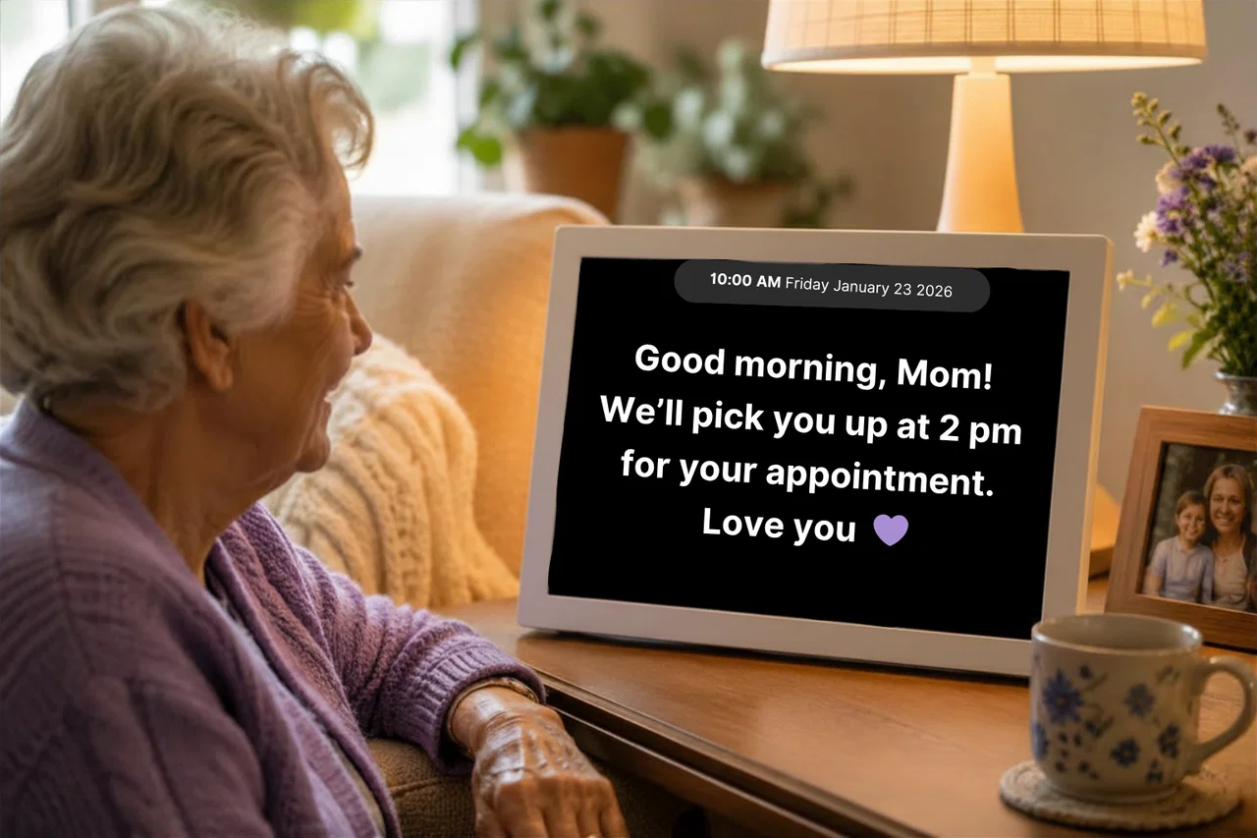
If a digital memory board sounds like the right fit for your family, Memoryboard is one option built specifically for this kind of remote, caregiver-friendly communication.
- A connected digital display made for seniors and their caregivers.
- Family members can send reminders, photos, appointments, schedules, and messages remotely.
- Designed to stay visible in the home, like a picture frame or bulletin board.
- No need for the older adult to open an app, answer a phone, or navigate complicated technology.
- Available in 10.1-inch and 15.6-inch sizes.
- A one-time purchase with no monthly subscription.
Learn more about Memoryboard
Frequently asked questions
It depends on the family's needs. A whiteboard can work well when someone is usually home to update it, while a digital memory board can help when family want to send reminders, photos, and messages remotely.
A dementia reminder board is any tool — paper or digital — used to display helpful information like the date, daily schedule, appointments, and reminders for someone living with memory loss.
Yes. Many digital memory boards, including Memoryboard, allow family members to send updates, photos, and messages from another room or another city.
Many caregivers find that a clear, consistent visual schedule can help a loved one feel more oriented throughout the day, though every person's needs are different.
Memoryboard is designed to stay visible in the home without requiring the older adult to open an app, answer a phone, or navigate complicated technology.
Make the Day Easier to Follow
Memoryboard helps families create a calm, visible routine at home — with reminders, appointments, photos, and messages in one familiar place.
Designed for older adults and people living with memory loss. Simple for caregivers to set up and update.
Choose the Right Size for Your Space
Pick the 10.1″ for nightstands and kitchen counters.
Pick the 15.6″ for living rooms and reading across the room.
Explore Memoryboard


