
Getting Started
Why Placement Matters So Much
Choosing the right location is one of the most important parts of setting up a Memoryboard for a loved one. In fact, the best place to put a digital calendar for seniors is wherever your loved one naturally looks throughout the day — not just wherever there happens to be space.
The best location depends on a few things: daily routines, room size, viewing distance, lighting, the type of reminders being displayed, and whether your family chooses the 10.1-inch or 15.6-inch Memoryboard.
Memoryboard lets family members and caregivers send reminders, appointments, messages, photos, and daily routines from anywhere — even long distance. The person viewing the board never needs to touch a phone, tablet, or complicated app. They simply look at the screen.
Before Choosing a Location, Ask These Questions
Does your loved one spend time in this area every day?
Can they see the screen without turning around?
Is the board visible from their usual chair or seat?
Is there a nearby electrical outlet?
Is the Wi-Fi connection reliable?
Is the screen protected from direct sunlight and glare?
Is the board away from water, steam, and cooking grease?
Is the area free from visual clutter?
Can the board stay plugged in at all times?
Is the screen positioned at a comfortable viewing height?
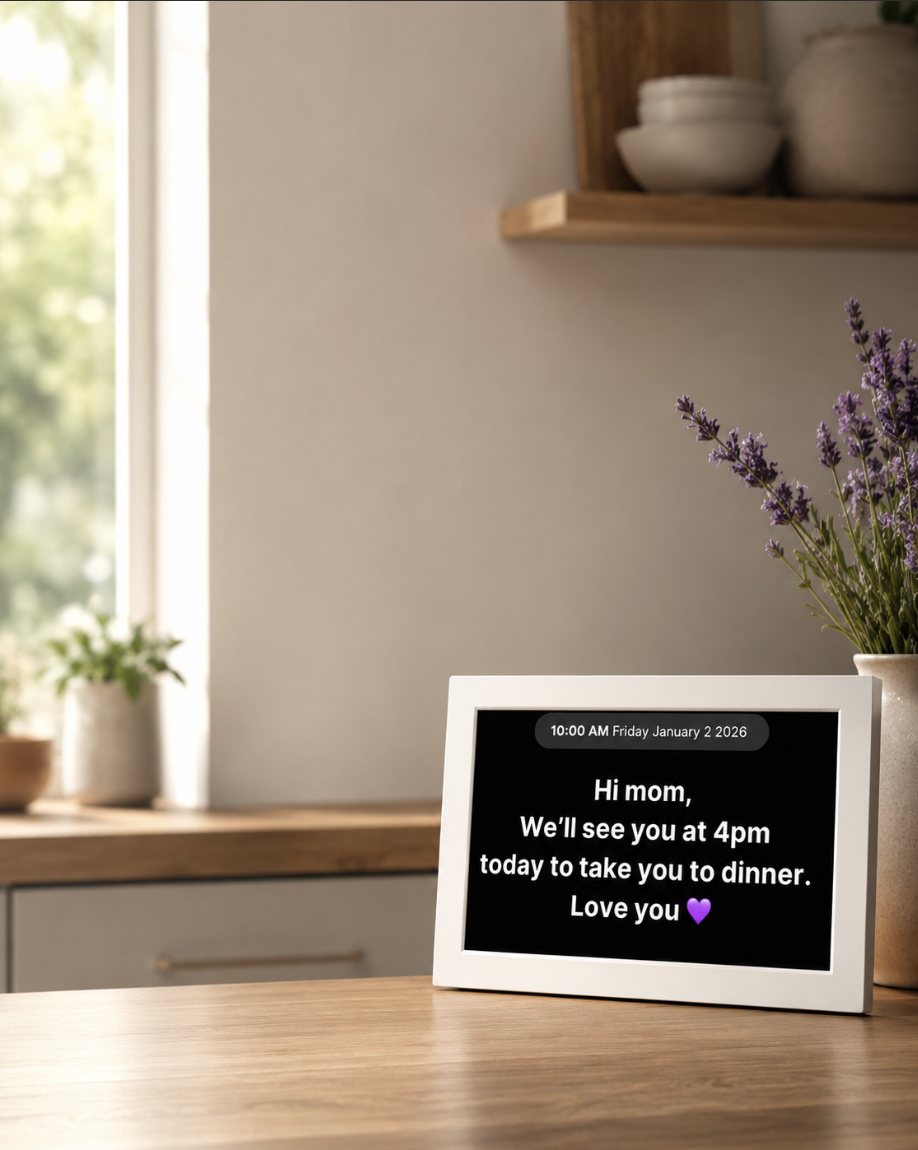
The Kitchen: Best for Daily Routines and Appointments
The kitchen is often one of the best rooms for a Memoryboard. Many older adults spend a large part of their day here — during breakfast, lunch, and dinner, while taking medications, enjoying morning coffee, or preparing meals.
Because these routines happen in the same familiar space every day, a Memoryboard placed in the kitchen becomes a natural, gentle part of daily life.
What to display in the kitchen
Doctor appointments
Medication reminders
Meal reminders
Family visit times
Grocery delivery updates
Daily schedules
Hydration reminders
Photos from family
Recommended Size
10.1-inch board — for a small kitchen counter, breakfast nook, or apartment kitchen.
15.6-inch board — for a larger kitchen, open floor plan, or longer viewing distance.
Placement Tips
Place it near the breakfast area
Position it where your loved one naturally sits
Keep it away from the sink
Keep it away from the stove
Avoid placing it directly under bright lights
Make sure cords do not create a tripping hazard
Do not place it behind appliances or decorations
The best kitchen location is usually near the place your loved one eats breakfast or drinks coffee.
Not sure which room is right?
Explore the Memoryboard collection and find the perfect fit for your loved one's home.
Shop Memoryboard
See Memoryboard in Every Room
From the kitchen counter to the living room, find the right size for your loved one's space.
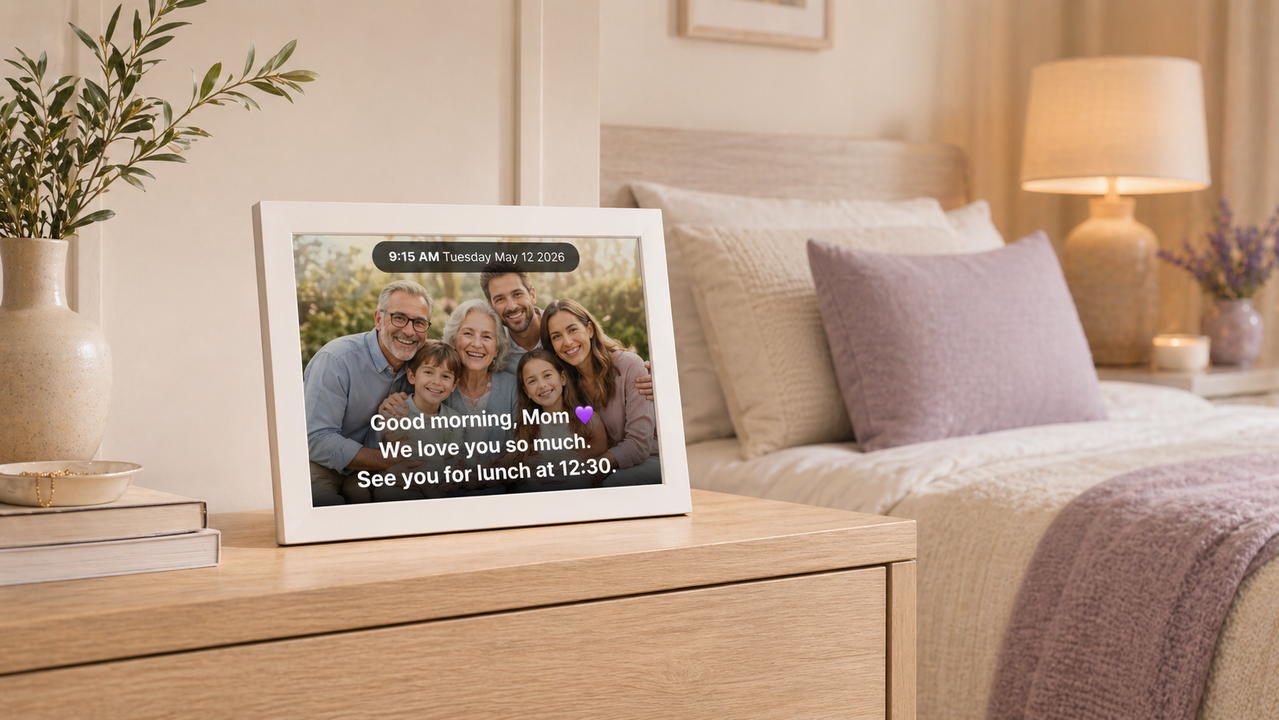
The Bedroom: Best for Morning and Evening Orientation
The bedroom is often where the day begins and ends. A Memoryboard placed here gently anchors the morning and evening — helping your loved one know the date and the day of the week the moment they wake.
It quietly supports the rhythms of the day: morning routines, bedtime routines, medication reminders, and appointment reminders. It can show when a caregiver is arriving and share reassuring messages from family — so the room feels calm and connected from the first moment to the last.
Recommended Size
Choose the 10.1-inch board for a nightstand, dresser, or smaller bedroom. Opt for the 15.6-inch board when the display needs to be seen from across the room or from bed.
Placement Tips
Make sure the board is visible from the bed
Avoid placing it too close to the person's face
Reduce glare from bedside lamps
Keep cords secure
Avoid blocking walking paths
Use calm, simple messages at night
Avoid overly bright content before bedtime
Consider your loved one's sleep habits and sensitivity to light when choosing where the screen faces.
More Placement Ideas
The Entryway: Best for Leaving-the-House Reminders
The entryway helps with the small but important reminders right before someone leaves home — like “Take your keys,” “Bring your hearing aids,” “Remember your glasses,” “Your appointment is at 10:00 a.m.,” and “Bring your jacket.”
Recommended size
10.1-inch for a narrow entry table; 15.6-inch for a larger foyer or shared entrance.
Keep the board visible near the door
Do not block the walkway
Keep it away from rain or outdoor moisture
Avoid creating a trip hazard
Works best as a secondary location if the person spends little time near the front door.
The Dining Area: Best for Scheduled Messages and Family Connection
Scheduled meals create predictable moments to see the screen. Use the dining area to display today’s schedule, family photos, birthday messages, meal and hydration reminders, and upcoming visits.
Recommended size
10.1-inch for a small table or breakfast area; 15.6-inch for a larger dining space or community dining area.
Keep it visible but out of the way of food and drinks
Avoid the center of a busy table
Choose a nearby console, shelf, or counter
Make sure text is readable from the person’s regular seat
A Desk or Home Office: Best for Independent Older Adults
Great for older adults who pay bills, use a computer, read mail, or organize appointments at a desk. Display appointment and bill reminders, family updates, and transportation schedules right where they work.
Recommended size
10.1-inch for a desk; 15.6-inch for a larger workspace or shared family area.
Less effective if the person rarely uses the desk.
A Senior Living Apartment: Choose the Most Familiar Daily Space
Memoryboard fits comfortably in nearly any senior living setting. Whether your loved one is in a private room, a small apartment, a studio, an assisted living suite, or an independent living apartment, the board can be placed wherever it will be seen most often throughout the day.
The goal is to choose the most familiar daily space — the spot where they naturally spend the most time. A location that blends into their everyday routine helps the board feel like a comforting part of home rather than another device to manage.
Strong placement options
Near the dining table
Beside the television
Near a favorite chair
On a dresser facing the bed
Near the entrance
In the main sitting area
Questions to Ask Staff
Where the resident spends the most time
Which outlets should be used
Whether the board can stay plugged in
Whether there are Wi-Fi requirements
Whether cords need to be secured
Whether staff can help prevent accidental unplugging
Recommended Size
10.1-inch board for small rooms and close viewing.
15.6-inch board for larger rooms, shared spaces, and longer viewing distances.

Where You Should Not Put a Memoryboard
Visibility and safety matter more than choosing the most attractive spot in the room.
Directly beside a sink
Next to a stove or oven
In a bathroom
In direct sunlight
Behind a person's usual seat
On an unstable table
In a crowded shelf filled with decorations
Near curtains that cover the screen
In a hallway the person rarely uses
Too high on a wall
Too low to see comfortably
Near a door that may hit the device
In a place with weak Wi-Fi
In an area where the power cord creates a fall risk
Visibility and safety are more important than choosing the most attractive location.
Which Memoryboard Size Is Best for Each Location?

10.1-Inch Memoryboard
- Best for close viewing
- Small kitchens
- Nightstands
- Desks
- Small apartments
- Breakfast nooks
- Side tables
- Limited counter space
- Personal spaces
- Viewing from a few feet away
15.6-Inch Memoryboard
- Best for longer viewing distances
- Living rooms
- Open kitchens
- Larger bedrooms
- Dining areas
- Assisted living rooms
- Shared family spaces
- Larger text and stronger visibility
- Viewing from across a room
Choose the 10.1-inch board when your loved one will view it from nearby. Choose the 15.6-inch board when the board needs to be visible from farther away or across a larger room.
Still deciding on a size?
Compare features side by side and pick the board that fits your loved one's space.
Compare Memoryboard Sizes
Try the Location Before Making It Permanent
The best placement may take a few days to identify — that's normal.
1
Place the Memoryboard in the proposed location.
2
Sit where your loved one normally sits.
3
Check whether the screen is easy to notice.
4
Confirm the text is easy to read.
5
Check for sunlight and lamp glare.
6
Walk through the person's daily routine.
7
Confirm the board stays visible during breakfast, television time, and bedtime.
8
Ask your loved one whether the location feels comfortable.
9
Test the Wi-Fi connection.
10
Secure the cord safely.
11
Keep the board in that location for several days.
12
Move it if your loved one frequently misses the messages.
Make the Memoryboard Easier to See and Use
Consistency can make a real difference for people experiencing memory changes.
Use short and clear messages
Use simple wording
Avoid displaying too many reminders at once
Select high-contrast content
Keep the screen clean
Place the board at eye level
Reduce glare
Use the larger board for longer viewing distances
Keep the surrounding area uncluttered
Use consistent locations and routines
Avoid moving the board frequently after the person becomes familiar with it
Real Families, Real Placements
Every home is different. Here's how three families found the right spot.
Example 1
A daughter places the 10.1-inch Memoryboard on her mother's breakfast counter because her mother eats there every morning. She uses it for appointment reminders, meal plans, and family photos.
Example 2
A family places the 15.6-inch Memoryboard beside the television in their father's living room. He can see the date, time, and reminders from his favorite chair.
Example 3
A caregiver places the 15.6-inch board in an assisted living apartment near the dining table. The resident sees activity reminders and family messages during every meal.
Frequently Asked Questions
The best place is wherever your loved one naturally spends time every day, such as a breakfast counter, a favorite chair, or a spot near the bed — somewhere they'll see it without having to search for it.
Yes. Many older adults spend meaningful time in the kitchen during meals and medication routines, making it one of the most reliable spots for daily reminders.
A bedroom placement can help with morning and evening orientation, but it works best with calm, simple content and reduced glare from lamps at night.
The 15.6-inch board is designed for longer viewing distances, making it a strong choice for living rooms, open kitchens, and larger shared spaces.
The 10.1-inch Memoryboard usually works best in small apartments, nightstands, or breakfast nooks where viewing distance is short.
Yes. Memoryboard works well in private rooms, studios, and assisted living suites — near a dining table, favorite chair, or dresser facing the bed.
Yes, keeping the Memoryboard plugged in at all times ensures reminders and messages are always available when your loved one looks at the screen.
Try securing the cord out of sight, choosing a more familiar location, or asking a caregiver or staff member to help keep it consistently plugged in.
Avoid placing the board in direct sunlight or facing bright lamps, and angle the screen away from strong overhead lighting.
Yes, but try to keep it in one place for at least a few days first. Consistency helps your loved one build familiarity with the location.
Find the Right Memoryboard for Your Loved One's Space
The best board is the one your loved one can easily see during their normal daily routine. The 10.1-inch size works well for smaller rooms and close viewing, while the 15.6-inch size is ideal for larger spaces and longer viewing distances. Families can send reminders, messages, appointments, routines, and photos from anywhere — and the person viewing the board never needs to manage a phone or complicated technology.
Compare Memoryboard Sizes
Make the Day Easier to Follow
Memoryboard helps families create a calm, visible routine at home — with reminders, appointments, photos, and messages in one familiar place.
Designed for older adults and people living with memory loss. Simple for caregivers to set up and update.
Choose the Right Size for Your Space
Pick the 10.1″ for nightstands and kitchen counters.
Pick the 15.6″ for living rooms and reading across the room.
Explore Memoryboard


