
Support
Why Not Just Buy a Dementia Clock?
If your loved one is living with dementia or memory loss, a dementia clock can seem like a natural place to start. It is simple. It is familiar. It shows the day, date, and time clearly. And for some families, that can absolutely help.
Read more

Written by
Tyler Zanini, Founder at Memoryboard
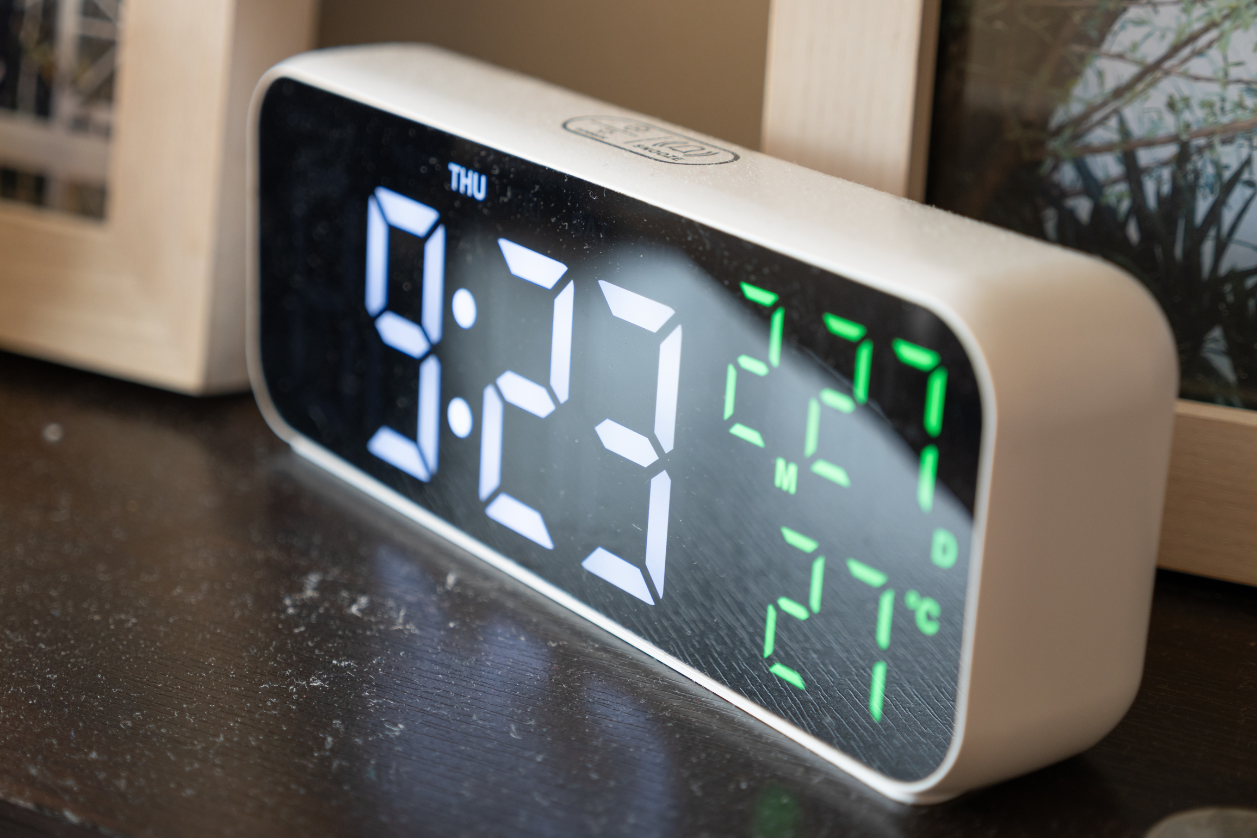
But many caregivers eventually realize the same thing: knowing the date and time does not always solve the real day-to-day challenges.
A person with dementia may still forget appointments, miss parts of their routine, feel anxious about what is happening next, or need repeated reassurance from family members throughout the day.
That is where the question changes from “Should I get a dementia clock?” to “Will a dementia clock really be enough?”
In many cases, the answer is no.
What Is a Dementia Clock?
A dementia clock is a clock designed to make time and date easier to understand. It often displays:
The full day of the week
The full month and date
The current time
Sometimes part of the day, like morning, afternoon, evening, or night
These clocks are often marketed for seniors with dementia, Alzheimer’s, or memory loss because they reduce confusion around time orientation.
And to be fair, that can be helpful.
If your loved one often asks:
What day is it?
Is it morning or night?
What time is my appointment?
When is lunch?
Where a dementia clock falls short
The problem is that dementia care usually requires more than orientation.
A clock tells someone what time it is.
It does not tell them what they need to do, who is coming, or what message their family wants them to see right now.
That gap matters.
Here are some of the most common limitations of a dementia clock.
1. It does not give reminders
A dementia clock may show that it is 2:00 PM. But it does not say:
Your daughter is visiting at 3:00 PM
It is time to get ready for lunch
Please bring your walker
Your caregiver will arrive this afternoon
Today is Tuesday, and physical therapy is at 1:00 PM
For many families, this is the biggest issue. The loved one does not just need to know the time. They need help understanding what the time means for their day.
2. It does not reduce as many repetitive questions
Many caregivers buy dementia clocks hoping they will reduce repeated calls and questions.
Sometimes they help a little. But often the questions continue, because the questions are not really about the clock.
They are about uncertainty.
A loved one may still ask:
What am I supposed to be doing today?
Is someone coming?
Where is everybody?
Did I miss anything?
What is for dinner?
Why am I here?
A clock cannot answer those questions. A clear, supportive message can.
3. It cannot be updated by family remotely
Most dementia clocks are static devices. Once set up, they mainly show the same type of information every day.
But dementia care is dynamic. Plans change. Routines shift. Families need to send updates quickly.
Maybe a doctor appointment moved.
Maybe a son is visiting after work.
Maybe the caregiver is running late.
Maybe you just want to send reassurance that says, “Hi Mom, I love you. I’ll call tonight.”
A standard dementia clock is not built for that.
4. It does not support emotional connection
This is a big one.
Many products for dementia focus only on function. But families know that emotional reassurance matters just as much.
A loved one with memory loss may benefit from seeing:
A note from family
A familiar photo
A reminder that someone is coming
A simple encouraging message
Those moments can help reduce anxiety and create a greater sense of calm.
A dementia clock does not really do that. It provides information, but not connection.
What families often really need instead
In many cases, families are not actually looking for a clock.
They are looking for a simple way to help their loved one stay oriented, supported, and connected throughout the day.
That often means a device that can do more, such as:
Show reminders in plain language
Display helpful daily messages
Be updated remotely by family or caregivers
Reinforce routines
Share photos and encouraging notes
Reduce confusion about what is happening next
This is why many families who start by looking at dementia clocks end up wanting something more useful for everyday life.
A better alternative to a dementia clock
If a dementia clock answers “What time is it?”, a reminder board answers the more important question:
“What do I need to know right now?”
That is where Memoryboard can be a better fit.
Memoryboard is a simple digital display that lets family members and caregivers send messages, reminders, and photos remotely. The messages appear automatically on the screen, so the older adult does not need to manage an app, a smartphone, or complicated technology.
Instead of only showing the time and date, Memoryboard can show helpful messages like:
Good morning, Dad. Today is Wednesday.
Your caregiver Sarah will arrive at 10:00 AM.
Lunch is at noon.
Your granddaughter Emma has soccer today.
We love you and will see you tonight.
That kind of message is often much more actionable and reassuring than a clock alone.
Dementia clock vs. Memoryboard
Here is the practical difference.
A dementia clock helps with:
Time awareness
Date awareness
Day and part-of-day orientation
Memoryboard helps with:
Daily reminders
Routine support
Reassurance
Remote communication from family
Photos and familiar messages
Reduced uncertainty throughout the day
For some families, a dementia clock may still be useful as a small part of the solution.
But if your goal is to help with day-to-day routine, connection, and caregiver communication, it often is not enough on its own.
When a dementia clock might still make sense
To be balanced, there are situations where a dementia clock can still help.
A dementia clock may be a good choice if:
Your loved one mainly struggles with knowing the day or time
You want a very low-cost starting point
You do not need remote reminders or messaging
Their routine is very consistent and rarely changes
In those cases, a clock can be a simple helpful tool.
But if your loved one needs more guidance, reassurance, or caregiver support, you will likely outgrow it quickly.
Signs a dementia clock is not enough
A clock may not be enough if your loved one:
Repeatedly asks what is happening that day
Forgets visitors, appointments, or routines
Gets anxious when plans change
Needs frequent reassurance from family
Does better with clear written prompts
Lives alone or spends part of the day alone
Has family members or caregivers who want to communicate remotely
If that sounds familiar, you are probably looking for more than a clock.
Why families choose Memoryboard instead
Families often choose Memoryboard because it is simple for the older adult, but flexible for the caregiver.
There is no need for the loved one to learn new technology. No phone to manage. No app to open. No complicated steps.
Family members can update the screen remotely and keep messages clear, timely, and personalized.
That means you can support your loved one with reminders like:
what day it is
who is visiting
when meals are happening
what appointment is coming up
a note of comfort and encouragement
It is a more human way to support memory loss.
Final thoughts: a dementia clock may help, but it may not solve the real problem
A dementia clock can be helpful for showing the day, date, and time.
But for many families, the real challenge is not just orientation. It is helping a loved one feel more grounded, more reassured, and more connected throughout the day.
That usually requires more than a clock.
If you are asking, “Why not just buy a dementia clock?” the better question may be:
What kind of support does my loved one actually need every day?
If the answer includes reminders, routine support, and connection from family, a tool like Memoryboard may be a better fit.
Looking for an alternative to a dementia clock?
Memoryboard helps families send reminders, messages, and photos to a loved one living with memory loss — all on a simple screen they do not need to manage.
It is designed to support daily routines, reduce confusion, and help families stay connected.
Join our mailing list and get our FREE daily routine template & tips guide 💜
Email address
Sign up
More from the blog
Read more helpful tips about connecting with your loved ones from the team at Memoryboard.


Empower people with memory loss
Memoryboard enhances daily life and strengthens connections


